
 Buy Crypto
- Markets
 Futures
- Spot
- Copy Trade
- Earn
- More
EUR/GBP gains traction above 0.8400 after German inflation data
By: bitcoin ethereum news|2025/05/14 15:30:08
0
Share
EUR/GBP rises above 0.8415 in Wednesday’s early session. German HICP inflation came in at 2.2% in April. ECB’s Schnabel said the central bank should keep a steady hand and hold rates close to current levels. The EUR/GBP cross trades in positive territory near 0.8415, snapping the seven-day losing streak during the early European trading hours on Wednesday. The Euro (EUR) recovers some lost ground as markets reduce bets on European Central Bank (ECB) interest rate cuts amid easing in trade and geopolitical tensions. ECB board member Isabel Schnabel, an outspoken policy hawk, said on Friday that the central bank should stop cutting borrowing costs as turmoil in the global economy is fueling price pressures and inflation was at risk of exceeding the ECB’s 2% target in the medium term. The less dovish remarks from ECB policymakers, along with the easing tensions after the US-China trade talks, provide some support to the shared currency. Financial markets see a 90% possibility of a rate cut in June and see another cut or two in subsequent months, indicating that Schnabel’s view goes counter to investor bets. Data released by the Federal Statistics Office reported on Tuesday that the German Harmonized Index of Consumer Prices (HICP) rose 2.2% in April, compared the March’s reading and the consensus of 2.2%. On a monthly basis, the HICP increased by 0.5%, after a 0.5% rise in the previous month. On the other hand, cooling employment and softening wage growth have triggered the expectation for the Bank of England (BoE) rate cuts. Last week, the BoE decided to lower its borrowing rates by 25 basis points (bps) to 4.25% and retained a “gradual and careful” monetary expansion approach. Pound Sterling FAQs The Pound Sterling (GBP) is the oldest currency in the world (886 AD) and the official currency of the United Kingdom. It is the fourth most traded unit for foreign exchange (FX) in the world, accounting for 12% of all transactions, averaging $630 billion a day, according to 2022 data. Its key trading pairs are GBP/USD, also known as ‘Cable’, which accounts for 11% of FX, GBP/JPY, or the ‘Dragon’ as it is known by traders (3%), and EUR/GBP (2%). The Pound Sterling is issued by the Bank of England (BoE). The single most important factor influencing the value of the Pound Sterling is monetary policy decided by the Bank of England. The BoE bases its decisions on whether it has achieved its primary goal of “price stability” – a steady inflation rate of around 2%. Its primary tool for achieving this is the adjustment of interest rates. When inflation is too high, the BoE will try to rein it in by raising interest rates, making it more expensive for people and businesses to access credit. This is generally positive for GBP, as higher interest rates make the UK a more attractive place for global investors to park their money. When inflation falls too low it is a sign economic growth is slowing. In this scenario, the BoE will consider lowering interest rates to cheapen credit so businesses will borrow more to invest in growth-generating projects. Data releases gauge the health of the economy and can impact the value of the Pound Sterling. Indicators such as GDP, Manufacturing and Services PMIs, and employment can all influence the direction of the GBP. A strong economy is good for Sterling. Not only does it attract more foreign investment but it may encourage the BoE to put up interest rates, which will directly strengthen GBP. Otherwise, if economic data is weak, the Pound Sterling is likely to fall. Another significant data release for the Pound Sterling is the Trade Balance. This indicator measures the difference between what a country earns from its exports and what it spends on imports over a given period. If a country produces highly sought-after exports, its currency will benefit purely from the extra demand created from foreign buyers seeking to purchase these goods. Therefore, a positive net Trade Balance strengthens a currency and vice versa for a negative balance. Source: https://www.fxstreet.com/news/eur-gbp-gains-traction-above-08400-after-german-inflation-data-202505140655
You may also like

Reflections and Confusions of a Crypto VC
As the tide recedes, crypto VCs face a life-and-death test. The bubble of blind token overvaluation has been burst, and the industry's valuation logic is returning to real revenue. In the face of increasingly savvy retail investors and dried-up liquidity, VCs that can only throw money around are des...

Morning News | Ether Machine terminates $1.6 billion SPAC deal; SpaceX holds approximately $603 million in Bitcoin; Michael Saylor releases Bitcoin Tracker information again
Overview of Important Market Events on April 12

Crypto ETF Weekly | Last week, the net inflow for Bitcoin spot ETFs in the U.S. was $816 million; the net inflow for Ethereum spot ETFs in the U.S. was $187 million
Bitwise updates Hyperliquid ETF application documents, with the trading code set as BHYP.

This week's news preview | The U.S. will release March PPI data; French President Macron will give a speech at Paris Blockchain Week
Highlights of the week from April 13 to April 19.

How Do Digital Assets Self-Custody? OpenAI Cofounder's 15-Step Checklist
It's time to outsource our memory to AI
Circle Product Management Director: The Future of Cross-Chain: Building an Interoperability Technology Stack for Internet Financial Systems
Building on the foundation laid by CCTP, Circle is increasing its investment in three main areas: settlement acceleration, broader asset interoperability, and orchestration, making cross-chain value flow more seamless and efficient, and achieving internet-level usability.
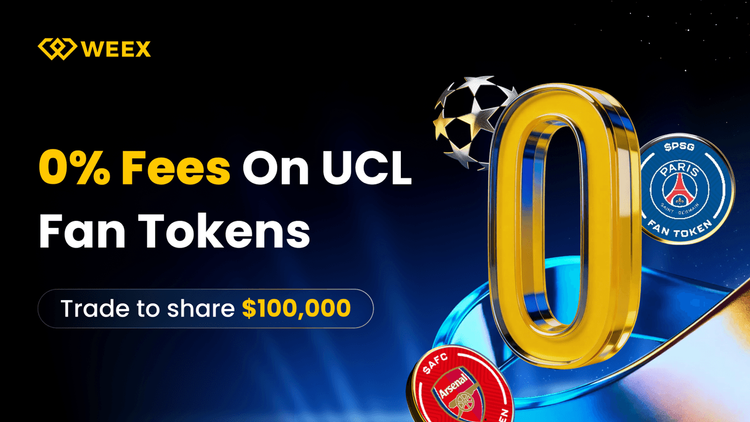
UCL Fan Tokens 2026 Guide: How to Trade UEFA Champions League Crypto with Zero Fees on WEEX
Discover UCL fan tokens like PSG, Barcelona, and Man City. Learn how to trade UEFA Champions League crypto with zero fees and earn rewards on WEEX.
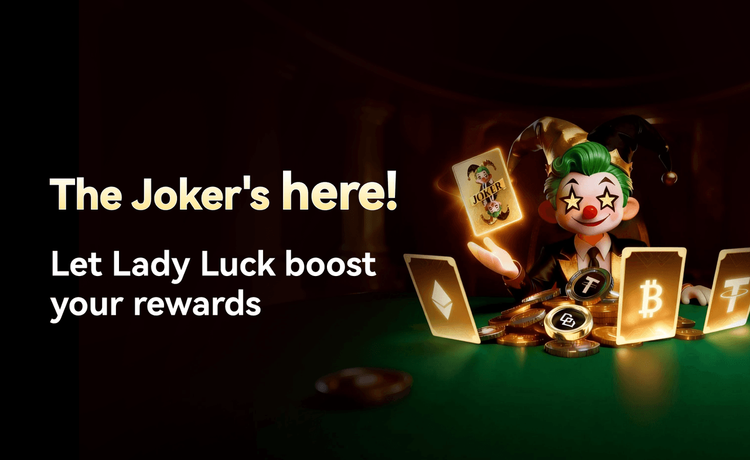
WEEX Poker Party Season 2: Check How to Earn Crypto Rewards Now!
Learn how WEEX Poker Party Season 2 (Joker Card Event) works. Discover rules, scoring, rewards, and strategies to earn crypto rewards through gamified trading.

Yu Weiwen: Steady Development of Hong Kong's Compliant Stablecoin Ecosystem
The President of the Hong Kong Monetary Authority, Eddie Yue, published an article titled "Steady Development of Hong Kong's Compliant Stablecoin Ecosystem" in the official column "Hui Si," in which he pointed out that this licensing marks a new stage in the regulation of stablecoins in Hong Kong.

After TACO Ceasefire, Iran War is Just on Pause
Ceasefire Eased Market Sentiment but Did Not Address Core Conflict

The 17-Year Mystery Will Be Solved, Who is Satoshi Nakamoto?
The New York Times Traces the Mystery of Satoshi Nakamoto, with Clues Pointing to Adam Back

5 Minutes to Make AI Your Second Brain
It's time to outsource memory to AI

Uniswap is trapped in an innovation dilemma
The various iterations of Uniswap are one of the sources of vitality in the DeFi market, but since 2023, Uniswap has not proposed any substantial innovations, instead adhering to traditional business explorations in application chains, Launchpads, etc., leading to a slump in token prices and market ...

What is the key to competition in crypto banking?
Digital banks, crypto cards, wallets, super apps, and DeFi protocols are all converging towards the same goal: to become the primary gateway for your savings, spending, earning, and transferring in the new era.

The flow of stablecoins and the spillover effects in the foreign exchange market
Research has found that an exogenous increase in net inflows of stablecoins significantly widens the price deviation between stablecoins and traditional foreign exchange, leads to depreciation of the local currency, and worsens the financing conditions for synthetic dollars (i.e., increases the doll...

After two years, Hong Kong's first batch of stablecoin licenses finally issued: HSBC, Standard Chartered make the cut
The regulated entity is set to launch a stablecoin in the first half of this year.
The person who helped TAO rise by 90% has now single-handedly crashed the price again today
As long as people are around, the story continues. But once they're gone, you may not even find a worthy opponent to play against.
3-Minute Guide to Participating in the SpaceX IPO on Bitget
Bitget IPO Prime brings a rare opportunity for global users to participate in world-class unicorn IPOs, allowing ordinary users to equally access the potential economic benefits of top-tier IPOs.
Reflections and Confusions of a Crypto VC
As the tide recedes, crypto VCs face a life-and-death test. The bubble of blind token overvaluation has been burst, and the industry's valuation logic is returning to real revenue. In the face of increasingly savvy retail investors and dried-up liquidity, VCs that can only throw money around are des...
Morning News | Ether Machine terminates $1.6 billion SPAC deal; SpaceX holds approximately $603 million in Bitcoin; Michael Saylor releases Bitcoin Tracker information again
Overview of Important Market Events on April 12
Crypto ETF Weekly | Last week, the net inflow for Bitcoin spot ETFs in the U.S. was $816 million; the net inflow for Ethereum spot ETFs in the U.S. was $187 million
Bitwise updates Hyperliquid ETF application documents, with the trading code set as BHYP.
This week's news preview | The U.S. will release March PPI data; French President Macron will give a speech at Paris Blockchain Week
Highlights of the week from April 13 to April 19.
How Do Digital Assets Self-Custody? OpenAI Cofounder's 15-Step Checklist
It's time to outsource our memory to AI
Circle Product Management Director: The Future of Cross-Chain: Building an Interoperability Technology Stack for Internet Financial Systems
Building on the foundation laid by CCTP, Circle is increasing its investment in three main areas: settlement acceleration, broader asset interoperability, and orchestration, making cross-chain value flow more seamless and efficient, and achieving internet-level usability.


 App
App