
CBRS Stock: What to Know About Cerebras After Its IPO


CBRS stock is the Nasdaq-listed Class A common stock of Cerebras Systems, an AI infrastructure company best known for its wafer-scale chips and high-speed inference systems. Cerebras began trading on May 14, 2026, after pricing its IPO at $185 per share.
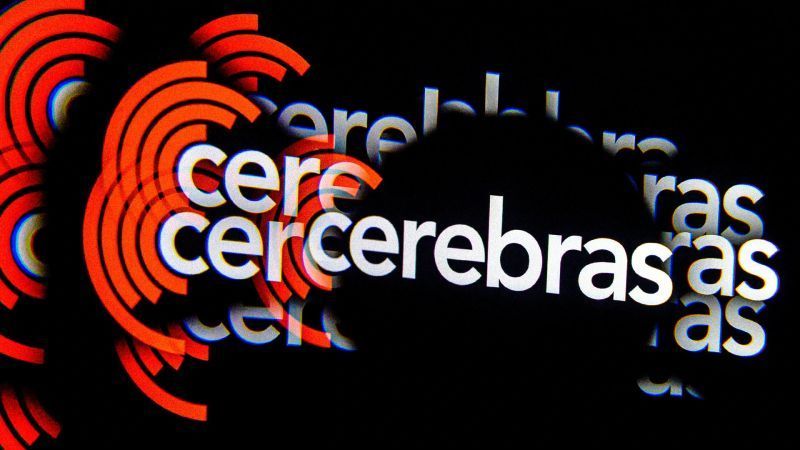
The stock immediately became one of the most watched AI listings of 2026. That attention is understandable: Cerebras sits directly in the market’s biggest theme, artificial intelligence compute. For readers who already trade through crypto-native platforms, WEEX’s guide to TradFi perpetuals and stock tokens is a useful primer on how traditional-market exposure can differ from holding actual shares.
CBRS Stock Key Facts
| Item | Detail |
|---|---|
| Company | Cerebras Systems Inc. |
| Ticker | CBRS |
| Exchange | Nasdaq Global Select Market |
| IPO price | $185 per share |
| Shares offered | 30 million Class A shares |
| First trading date | May 14, 2026 |
| May 14 close | $311.07, up 68.15% from IPO price |
| Core business | AI chips, systems, software, and inference infrastructure |
Cerebras raised about $5.55 billion in the IPO before any underwriter option exercise. The company also granted underwriters a 30-day option to buy up to 4.5 million additional Class A shares.
What Does Cerebras Do?
Cerebras builds AI infrastructure for training and inference. Its core technical pitch is the Wafer-Scale Engine, a very large processor designed to reduce the communication bottlenecks that can appear when AI workloads are split across many smaller chips.
That makes Cerebras different from most AI chip companies. It is not simply selling a component. The company sells systems, software, and cloud-style access around its hardware. For investors, that distinction matters because CBRS stock is not just a semiconductor story. It is also a data-center execution story, a software ecosystem story, and a customer concentration story.
Why Did CBRS Stock Jump?
CBRS stock jumped because investors treated Cerebras as a rare public-market pure play on AI infrastructure. Demand was helped by three factors: the size of the AI compute market, the scarcity of new AI hardware listings, and Cerebras’ high-profile customer and partner narrative.
The IPO was priced at $185 per share, above earlier marketed ranges. On its first trading day, CBRS opened far above that price and closed at $311.07 on May 14, 2026.
The move shows strong demand, but it also raises the bar. A stock that rises sharply on day one must later justify that premium with revenue conversion, margin improvement, customer diversification, and credible execution. Traders comparing equity exposure with crypto-native products can review the types of assets available on WEEX TradFi, while still checking whether any specific market is actually available in their region and account.
The Bull Case For CBRS Stock
The bull case is simple: AI demand keeps expanding, Nvidia supply and cost remain pressure points, and customers want alternatives for certain workloads. If Cerebras can prove its systems deliver meaningful performance advantages at scale, CBRS stock could become a liquid public-market way to express that thesis.
Cerebras also has unusually visible market attention because of major AI-related relationships. That does not eliminate execution risk, but it gives investors a clearer reason to watch the company than many early-stage hardware names.
The better bullish argument is not “Cerebras replaces Nvidia.” That is too blunt. The more realistic case is that Cerebras wins valuable slices of the AI infrastructure market where its architecture has a real performance or cost advantage.
The Risks Behind The IPO Pop
The biggest risk in CBRS stock is valuation discipline. IPO enthusiasm can pull future expectations into the present very quickly. When that happens, even good operating news may not be enough if the stock already assumes exceptional growth.
Cerebras also needs to prove that its growth quality is durable. Its 2025 revenue was about $510 million, up sharply from 2024, but filings and market analysis point to heavy customer concentration and operating losses beneath the headline profitability. Reported net income was helped by non-operating accounting effects, while the core business still had an operating loss in 2025.
| Risk | Why it matters |
|---|---|
| Valuation | A large first-day pop leaves less room for disappointment |
| Customer concentration | Revenue can look strong but still depend on a few large buyers |
| Operating losses | Hardware and infrastructure scaling require heavy spending |
| Supply chain | Advanced AI systems depend on manufacturing, power, and deployment capacity |
| IPO volatility | Early trading can be driven by scarcity, allocation, and momentum |
| Competition | Nvidia, AMD, cloud providers, and custom silicon remain formidable |
What traders often miss is that IPO price and public trading price are different games. Many retail investors do not receive shares at the IPO price. They buy after the open, when the easy allocation gain may already be gone. A clear position sizing plan is often more useful than trying to call the perfect entry.
Should Investors Buy CBRS Stock Now?
CBRS stock is worth watching, but the first trading days are not the cleanest moment to judge fair value. The company has a compelling AI infrastructure story, but the market has already rewarded that story aggressively.
A more disciplined approach is to watch the first few earnings reports, revenue concentration trends, gross margin direction, and management’s ability to convert backlog or partnerships into recognized revenue. The lock-up expiration window also matters because additional insider or early investor supply can change the trading setup.
For investors who still want exposure, risk control matters more than the headline. A small, planned allocation is very different from chasing a volatile IPO because the chart is moving. The same discipline used in risk management for fast-moving crypto markets applies here: define the downside before the trade, not after the price moves against you.
Conclusion
CBRS stock gives public-market investors a direct way to track Cerebras, one of the most visible AI infrastructure companies outside the Nvidia ecosystem. The business has a real technology narrative and strong market timing, but the IPO pop means expectations are already high.
The key question is not whether Cerebras is interesting. It is whether the company can grow into the valuation public investors assigned to it after May 14, 2026.
FAQ
Is CBRS stock a crypto asset?
No. CBRS stock is a Nasdaq-listed equity for Cerebras Systems. It is not a token, coin, or on-chain asset.
What was the CBRS IPO price?
Cerebras priced its IPO at $185 per share for 30 million Class A shares.
When did CBRS stock start trading?
CBRS stock began trading on the Nasdaq Global Select Market on May 14, 2026.
Why is Cerebras compared with Nvidia?
Both companies are tied to AI compute, but they have different architectures and business positions. Cerebras is better understood as an AI infrastructure challenger in specific workloads, not a direct one-for-one Nvidia replacement.
What should investors watch next?
Watch revenue conversion, customer concentration, gross margin, operating losses, supply constraints, and post-IPO lock-up dynamics.
Risk Warning
CBRS stock is a newly listed equity and may be highly volatile. IPO stocks, AI-related equities, crypto assets, and derivatives can move sharply and may result in partial or total loss of capital. Investors should consider valuation risk, liquidity risk, leverage risk, customer concentration, execution risk, and broader market volatility before trading.
You may also like

World Collective Oil Reserve (WCOR) Price Prediction 2026-2045: Expert Insights
WCOR (World Collective Oil Reserve) is a Solana-based cryptocurrency token that promotes an “oil reserve + real-world asset (RWA) narrative.” However, there is no public evidence that it is actually backed by physical oil assets. It is essentially a highly speculative, narrative-driven token. Its current market cap is around $14 million, with relatively low liquidity and high volatility, and its price is mainly driven by market sentiment and hype. Most analyses suggest limited short-term upside, with a possible gradual increase to around $0.02 by 2030. Overall, it is considered a high-risk crypto asset driven more by narrative speculation than fundamentals.
WEEX Gold & Silver 0% Fees Event: Trade Metals, Crude Oil and Stock Futures With Zero Fees
Join the WEEX 0-fee futures event from April 16 to May 31, 2026. Trade eligible gold, silver, crude oil, and stock futures with 0% fees.
Can PAC Coin Reach $1 Soon? Analyzing Public Asset Control
PAC is a Solana-based meme token with a government-themed narrative, but it is highly speculative.
At its current price (~$0.0009) and 1B supply, reaching $1 would require a $1B market cap, which is very unlikely.
Short-term moves to $0.001 or $0.01 are more realistic, but the token is highly volatile due to low liquidity and hype-driven trading.
Overall, $1 is not a realistic target, and PAC is better suited for short-term speculation than long-term investment.
What Is SAOS? Strategic American Oil Supply Token Explained
SAOS is a meme token on Solana with a 75,000 USD market cap and 22,000 USD locked liquidity, positioned around oil supply themes but lacking real asset backing
It thrives on pure narrative speculation, with no utility, website, or doxxed team, making it highly volatile and attention-dependent
Traders should distinguish SAOS from legitimate real-world asset projects, as its branding is speculative rather than substantive
Positive aspects include locked liquidity reducing rug pull risks, but low trading activity signals high uncertainty
NBIS Stock: What Nebius’ AI Cloud Surge Means Now
NBIS stock jumped as Nebius reported rapid AI cloud growth. See the key Q1 2026 numbers, catalysts, valuation risks, and what to watch next.

What Is Public Asset Control (PAC) Coin? Explained for Beginners
Public Asset Control (PAC) is a Solana-based token that uses a “government asset control” narrative involving oil and gold themes, but it has no verified ties to any real institutions or governments. It is mainly an entertainment-focused, speculative meme coin.
The project’s claims about links to entities like BlackRock or Palantir are unverified, and its own disclaimer states it is not a real financial or institutional asset. Like many new Solana tokens, PAC is highly volatile, with low liquidity and limited transparency, including no fully verified audit.
Overall, PAC is a high-risk speculative token driven by hype and storytelling rather than real utility. Beginners are advised to be cautious, verify contract details, and prioritize risk control before considering any trading.
Public Asset Control: What PAC Token Really Is
Public Asset Control PAC is a Solana token with bold asset-control branding. Learn what it is, what is verified, and the key trading risks.

Why Is Chinese Oil Asset Reserve (COAR Crypto) Trending Now?
Why is Chinese Oil Asset Reserve trending now? Learn the latest COAR crypto price action, trading volume, oil narrative, Solana pair data, and what is driving attention today.
How to Buy Chinese Oil Asset Reserve (COAR) Token in 2026: Latest Step-by-Step Guide, Contract Address, and Safe Buying Tips
How to buy Chinese Oil Asset Reserve (COAR) token step by step, including the official COAR contract address, Solana wallet setup, SOL funding, and latest market data.

COAR Coin: What Chinese Oil Asset Reserve Really Is
COAR coin is a new Solana oil-narrative token. Learn what Chinese Oil Asset Reserve claims, how to verify the contract, and key trading risks.
Did the CLARITY Act Pass Today? Latest Status and the History of the Crypto Bill
SEO meta description: Did the CLARITY Act pass today? Read the latest crypto bill update, the history of the CLARITY Act, House and Senate votes, and what happens next for U.S. crypto regulation.
What Is Chinese Oil Asset Reserve (COAR) Token? $COAR and Coar Stock Relationship Explained
Chinese Oil Asset Reserve (COAR) token explained, $COAR price, Solana details, and the relationship between COAR and Coar stock. Learn the latest facts.
Trade to Earn on WEEX: Join the Futures Trading Event and Earn Real-Time WXT Rewards Throughout May 2026
Join the WEEX Trade to Earn Series Five event from May 1–31, 2026 and earn real-time WXT rewards through futures trading. Boost your rebate level, complete missions, invite friends, and maximize your trade to earn rewards with USDT-M futures trading.
What Is World Cup Meme Coin? Football Meme Crypto Narrative Explained
World Cup meme coin $WCMEME is a Solana token that collapsed 96% in 24 hours. Learn how football meme narratives work and the risks involved.

Trade to Earn With Futures Trading on WEEX: How Smart Traders Are Turning Every Position Into WXT Rewards
Join the WEEX Trade to Earn Series Five campaign and earn real-time WXT rewards through futures trading from May 1–31, 2026. Upgrade mining levels, unlock higher rebate ratios, complete missions, and maximize your trade to earn rewards with USDT-M futures trading.

SpaceX IPO Stock Market Impact: What Investors Should Watch
SpaceX’s IPO could reshape indexes, liquidity, space stocks, and crypto risk appetite. Here is what matters before the listing.

HMSTR Token Price: What Moves Hamster Kombat Now
Track HMSTR token price, supply, catalysts, and risks. Learn what drives Hamster Kombat price action and what traders should watch.
How to Buy Public Asset Control (PAC) Token in 2026: Latest Solana Buying Guide
How to buy Public Asset Control (PAC) token in 2026, PAC contract address, Solana wallet setup, Jupiter swap guide, latest price, liquidity, and risks.
World Collective Oil Reserve (WCOR) Price Prediction 2026-2045: Expert Insights
WCOR (World Collective Oil Reserve) is a Solana-based cryptocurrency token that promotes an “oil reserve + real-world asset (RWA) narrative.” However, there is no public evidence that it is actually backed by physical oil assets. It is essentially a highly speculative, narrative-driven token. Its current market cap is around $14 million, with relatively low liquidity and high volatility, and its price is mainly driven by market sentiment and hype. Most analyses suggest limited short-term upside, with a possible gradual increase to around $0.02 by 2030. Overall, it is considered a high-risk crypto asset driven more by narrative speculation than fundamentals.
WEEX Gold & Silver 0% Fees Event: Trade Metals, Crude Oil and Stock Futures With Zero Fees
Join the WEEX 0-fee futures event from April 16 to May 31, 2026. Trade eligible gold, silver, crude oil, and stock futures with 0% fees.
Can PAC Coin Reach $1 Soon? Analyzing Public Asset Control
PAC is a Solana-based meme token with a government-themed narrative, but it is highly speculative.
At its current price (~$0.0009) and 1B supply, reaching $1 would require a $1B market cap, which is very unlikely.
Short-term moves to $0.001 or $0.01 are more realistic, but the token is highly volatile due to low liquidity and hype-driven trading.
Overall, $1 is not a realistic target, and PAC is better suited for short-term speculation than long-term investment.
What Is SAOS? Strategic American Oil Supply Token Explained
SAOS is a meme token on Solana with a 75,000 USD market cap and 22,000 USD locked liquidity, positioned around oil supply themes but lacking real asset backing
It thrives on pure narrative speculation, with no utility, website, or doxxed team, making it highly volatile and attention-dependent
Traders should distinguish SAOS from legitimate real-world asset projects, as its branding is speculative rather than substantive
Positive aspects include locked liquidity reducing rug pull risks, but low trading activity signals high uncertainty
NBIS Stock: What Nebius’ AI Cloud Surge Means Now
NBIS stock jumped as Nebius reported rapid AI cloud growth. See the key Q1 2026 numbers, catalysts, valuation risks, and what to watch next.
What Is Public Asset Control (PAC) Coin? Explained for Beginners
Public Asset Control (PAC) is a Solana-based token that uses a “government asset control” narrative involving oil and gold themes, but it has no verified ties to any real institutions or governments. It is mainly an entertainment-focused, speculative meme coin.
The project’s claims about links to entities like BlackRock or Palantir are unverified, and its own disclaimer states it is not a real financial or institutional asset. Like many new Solana tokens, PAC is highly volatile, with low liquidity and limited transparency, including no fully verified audit.
Overall, PAC is a high-risk speculative token driven by hype and storytelling rather than real utility. Beginners are advised to be cautious, verify contract details, and prioritize risk control before considering any trading.


